 kengdevLet’s talk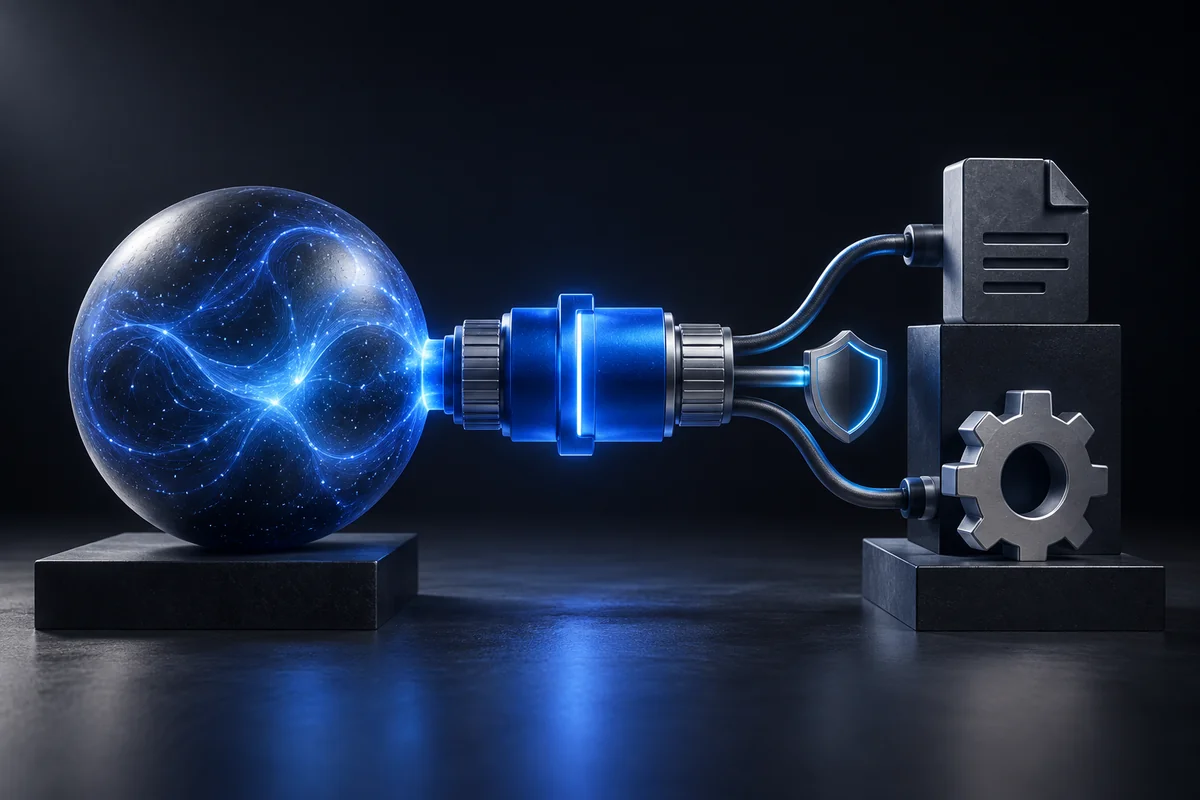
Updated on 2026-09-10
The Model Context Protocol is an open standard describing how an agent discovers and calls external tools, whether a database, a business API or a file system. It replaces one bespoke connector per application with a single interface several agents reuse.
Wire an agent to your tools without rewriting an integration every time you change model.
What you expose through MCP becomes your agent's attack surface. Expose the useful minimum.
MCP: a tool standard, not magic
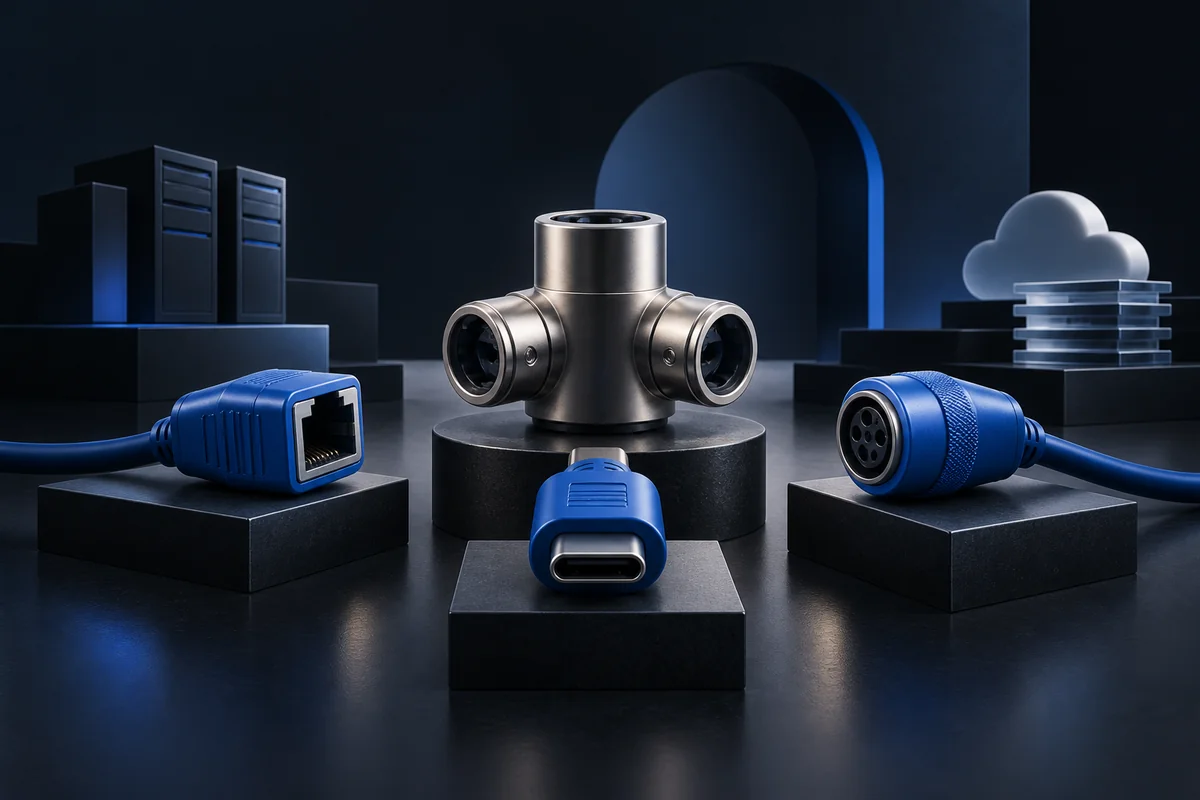
The Model Context Protocol (MCP) is an open standard introduced by Anthropic in November 2024 to wire AI applications to data sources and tools in a homogeneous way. The common analogy makes it a USB-C port for AI apps.
The typical architecture rests on three roles: a host (the agent or the app) creates MCP clients, and each client talks to a server that exposes tools and resources. Client and server most often communicate over JSON-RPC. The model discovers the tools through natural-language descriptions and call schemas.
MCP does not replace your business API. It makes it consumable by several clients (Claude, other assistants, agentic IDEs) with a common contract. Without a stable API, MCP only formalizes the chaos.
The ecosystem includes prebuilt servers (Drive, Slack, GitHub, Postgres, browsers) and SDKs. Multi-client adoption is the real argument for build once.
What you expose (and hide)
Each tool carries a name, a model-facing description and a parameter schema. Start with few tools, three to seven well tested, and favor reads before writes.
In an SME, the tools that help right away are called search_docs, get_ticket, draft_reply or create_task. The ones that turn dangerous without guardrails are called delete_*, send_email_unattended, update_price or export_all_customers.
Tool schemas consume tokens before any user request. If you wire several MCP servers, audit that entry cost (see context engineering).
Security and governance
Treat an MCP server like a privileged microservice: it needs client authentication, per-tool authorization, rate limiting, structured logs and separate environments.
The classic threats are well known:
- A prompt injection that hijacks a tool
- Exfiltration through an overly broad read
- Unexpected tool chaining
- Confusion between tenants
So are the countermeasures:
- An allowlist and schema validation
- A sandbox and HITL on writes
- PII filtering on the output
- Adversarial prompt tests
Secrets never go into the prompt: use a vault or environment variables. And every server has an owner, who decides who adds a tool and who reviews it.
Computer use and browsers
When there is no clean API, computer use and browser control expand the integration surface. The approach is powerful, but fragile and security-sensitive. Reserve it for legacy screens and isolated POCs, with a VM, least privilege and session recording.
For critical paths, prefer the API and MCP duo, with the same discipline as a headless CI agent.
SME roadmap
The roadmap fits in five steps:
- Pick one single use case
- Stand up a read-only MCP server
- Add one write, with HITL
- Track token and error metrics
- Expand
On the Claude Code side, a build or ticket MCP changes the work loop, but each active server inflates the session context (see the Claude Code article).
If you want a clean allowlist and audit trail, we can scope it in 20-40 minutes.
Frequently asked questions
Is MCP mandatory?
No. A well-designed REST API is often enough. MCP pays off when several AI clients share the same tools.
Who created MCP?
Anthropic open-sourced the protocol in November 2024. The spec, the SDKs and the example servers are public, and the multi-client ecosystem keeps growing.
Self-host an MCP server?
Yes, and it is even recommended for internal data. Isolate the network and monitor the server like a production service.
MCP and personal data?
Every read tool can expose PII to an LLM. Apply minimization, masking and legal bases: you do not wire the whole Drive by default.
How many tools at the start?
Three to seven. Beyond that, non-regression and schema cost explode before the use case is proven.
Link to multi-agent?
MCP tools one or several agents. Multi-agent architecture, with its router and specialists, has its own article.
Sources and references
- The 2026-07-28 SpecificationModel Context Protocol
Primary documentation for product capabilities and changes.